The future is you-shaped
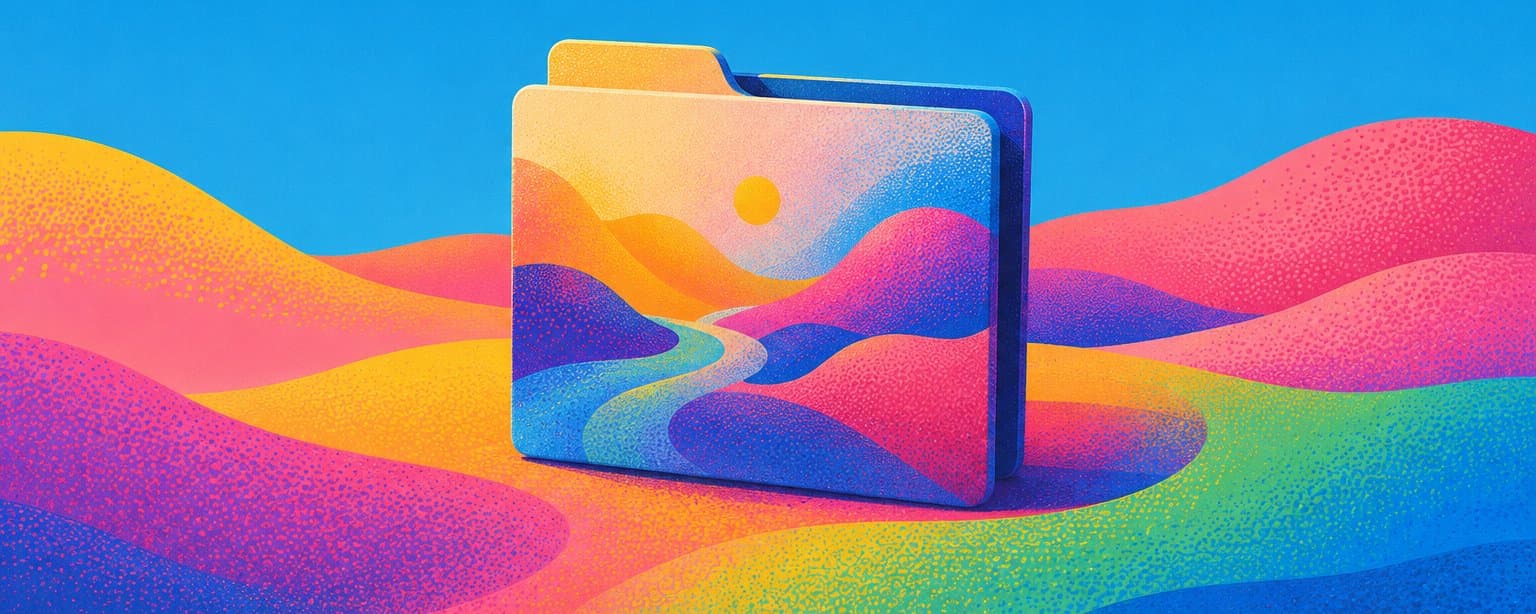
If AI is the painter, we’re missing the canvas. It’s not Codex, or a siloed web, or desktop apps, or mobile apps.
LLMs keep building the old, immutable, one-size-fits-all software. We keep trying to invent the future using the past. The future is moldable, dynamic, personalized, concurrent.
The future is an infinite canvas that can shape-shift into what you need, not what others are willing to build and maintain for you. It’s a realtime adaptation that solves your problems minutes before or after you have them.
The future isn't about the builders. It's about you.
8,000 lives wasted on thrash tax
We waste 5 billion hours annually switching software, costing nearly 600,000 years of human life or 8,000 entire lifetimes
All of our less-than experiences are forced into being by companies with misaligned incentives. Show me the incentives and I'll show you the outcome, they say. We all share the scar tissue of that truth.
Each needed to sell you a separate subscription, because their VC funding or shareholders needed to see returns. Each needed their own platform, their own design language, their own price hikes, their own file types, their own architectural trade-offs. Each was bloat, excess, built-for-you-until-it-wasn't. You mattered to them, until you didn't.
Companies spend ~$500B annually adapting themselves to software that doesn’t quite fit them, e.g. switching systems, integrating fragmented tools, retraining teams, migrating data, paying overlapping vendors, and rebuilding workflows. That's roughly 8% of global IT spend, all on waste.
If we respect people enough to treat time as the truest form of wealth and measure this against how many lifetimes we're wasting by doing this thrash dance, we see the true cost.
We've somehow decided it's worth 8,000 human lives annually to continue building software the way it's always been built.
After all, what's a few thousand lives here and there as long as the balance sheet keeps going? As long as we're all comfortable building just enough to keep customers happy.
The future is not a shared experience.
It's exclusive, personalized, you-shaped.
If the past is full of constraints, the future is limitless. If the past is rigid, the future is flexible. If the past is locked-in and paid, the future is liberating and free. If the past is siloed, disjointed experiences, the future is a unified canvas that grows and shrinks to fit your life and your needs. If the past is papercuts, the future is uncompromising.
A better future can only be one that contrasts with and improves upon all the shortcomings of the past and present.
A lot of people think the web is the perfect place for that future, and that’s why OpenAI and Anthropic built out web-based coding agents years back. The engineers got their way, you know so they could create infinite scale... for what purpose, who knows. But it was easy and comfortable and it was how they could actually create lock-in to funnel into subscriptions, so why not.
Then they noticed no one actually adopted those over-engineered systems, so they pivoted to local where finally millions of people were willing to try their agents.
But wait... why did local work? Because they met users where they were currently stuck: on their machine, where they work day in and day out, across thousands of files and sensitive credentials, across work and life and hobbies, whether parent or student or child. They built a scaffold to rescue people where they were, in the hopes of bringing them to where they think they could best be monetized.
Codex's success is deeply intertwined with the understanding that, unsurprisingly, people live and orchestrate their lives locally. The only canvas they really needed was a filesystem. File over app. File over web. Simple over complex.
The remaining tension is there's less lock-in locally, with users able to switch agents at will. So companies keep trying to nudge users into publishing artifacts to the web where switching costs and tech debt are higher. Again, show me the incentives and I'll show you the outcomes.
They keep building the future by trying to force it to be the past, including everything bad about the past.
Filesystems are all we need
Local agents like Claude and Codex have shown that filesystems are all you need. No vectors or RAG, no rigid database schemas, no expensive VPCs to push code to and worry about securing. Just a filesystem.
Moldable has shown you can create any experience imaginable, all within the same app, by using a filesystem. 30+ apps with isolated workspaces and isolated data. No databases. No over-engineered bullshit or fluff. And guess what? When your needs change, you're a minute away from having it your way yet again. No roadmap requests or enterprise agreements or forward deployed engineers. The user wins.
With a canvas like that, I can create an EHR suite of apps for a healthcare org, while at the same time helping a doctor to have a personal workspace to learn piano and take care of their plants. All in the same app. Kill off all your plants? Just delete the plant app, easy peasy. The canvas adapts.
A big part of the leverage employees will have in the future is exactly these sorts of custom canvas and experiences that encapsulate their unique strategy and workflows. When their workflow changes, the experience will change... all backed by the simplicity of a filesystem.
There's no need for their app or tool or canvas to look like yours. There's no need for their design or software or data storage or orchestration setup to look like yours.
Just as we don't prescribe what terminal all engineers on a team should use, or what commands they run, or what food they eat, we also won't prescribe what experiences people should build and use. Outcomes will win, the rest is noise.
Filesystems are infinitely flexible, incredibly fast, and are the single solution that has survived 40+ years of refactorings and advances. Everything we know as software and cloud today is fundamentally just an (over-engineered) abstraction over top of a filesystem.
Oddly, the companies best positioned for an infinitely flexible future are Box and Dropbox because they let people work with virtual filesystems from anywhere in the world. Their costs boil down to storage, ingress, and egress.
The future is moldable
I'll share my secret truth: if the past is static, the future is moldable. Anything that gets in the way of that will ultimately fail and be replaced.
Evolution always wins.
We've built programming languages, dev frameworks, cloud hosting, SaaS, and companies all around the idea of software being static. Now we need to throw that out and build a canvas that is dynamic and adaptable. One that listens to signals and adjusts to fit you, not others. Not your company, not your coworker, not even your spouse. Just you.
Software is just cached tokens at this point. It’s a snapshot of a need, of a moment. Lives are incredibly dynamic though, so we should stop creating software-defined lives and find ways to meet people where they are truly stuck in their individual lives. Mold ourselves to their needs, and finally free users from our needs and compromises as builders.
We need to stop being solution-anchored to the past and think more about what 20 years from now will look like. What will an infinite experience canvas look like? How do we mold ourselves to the shape of a person’s lived experience? Especially as it constantly changes.
Per first principles, the only canvas we need for now is a filesystem. Start back at the most flexible primitive, strip away the noise, and build an uncompromising experience that lets people live an uncompromising life.
Use time as the truest form of wealth and measure that as the only key metric. If it doesn’t give people back more of their time, it’s the wrong solution. Period.
Give people a canvas worth painting their lives onto. Give people a future worth living.